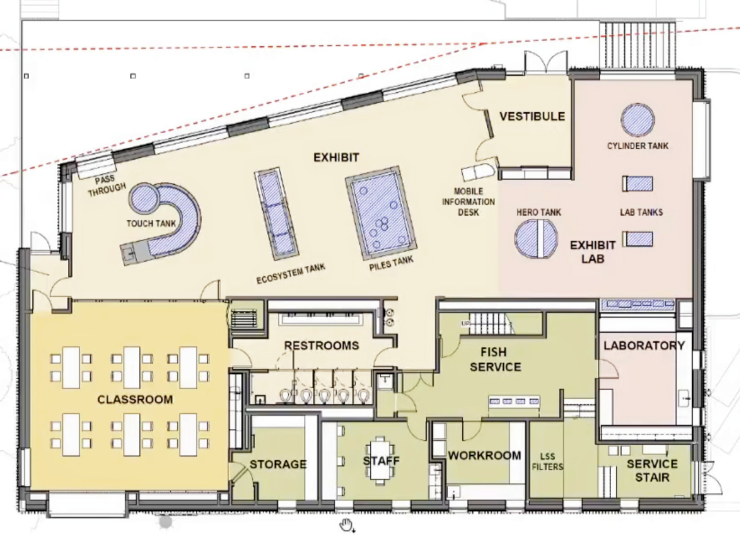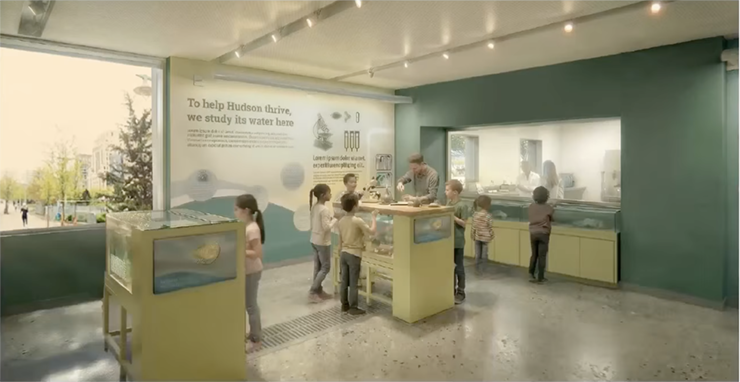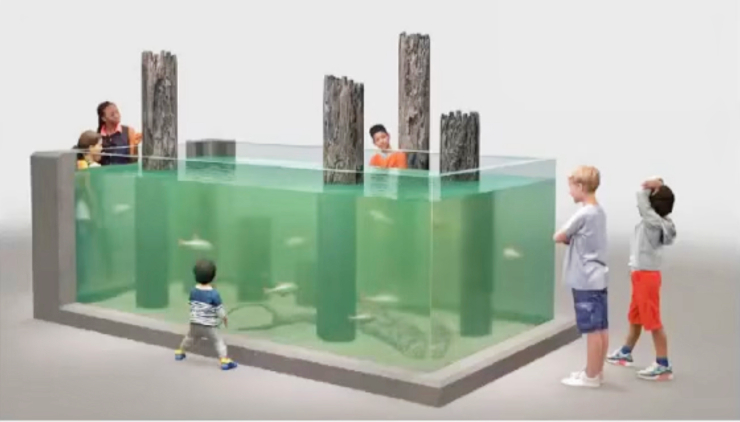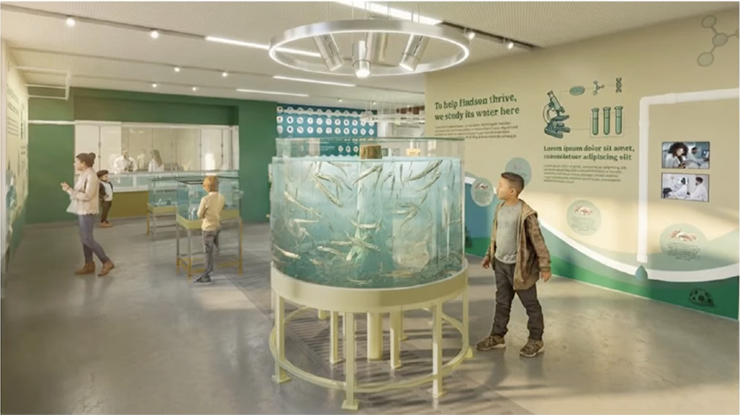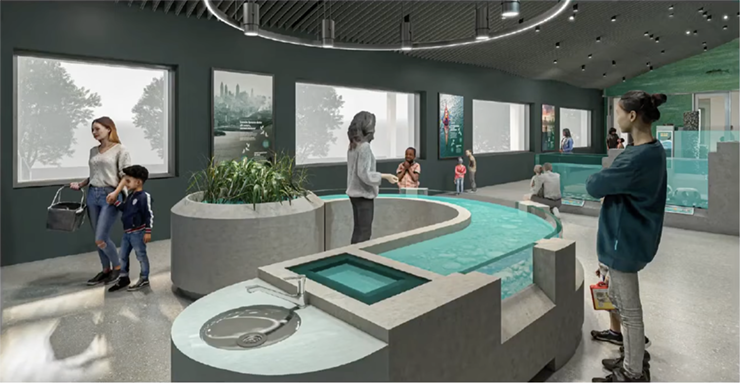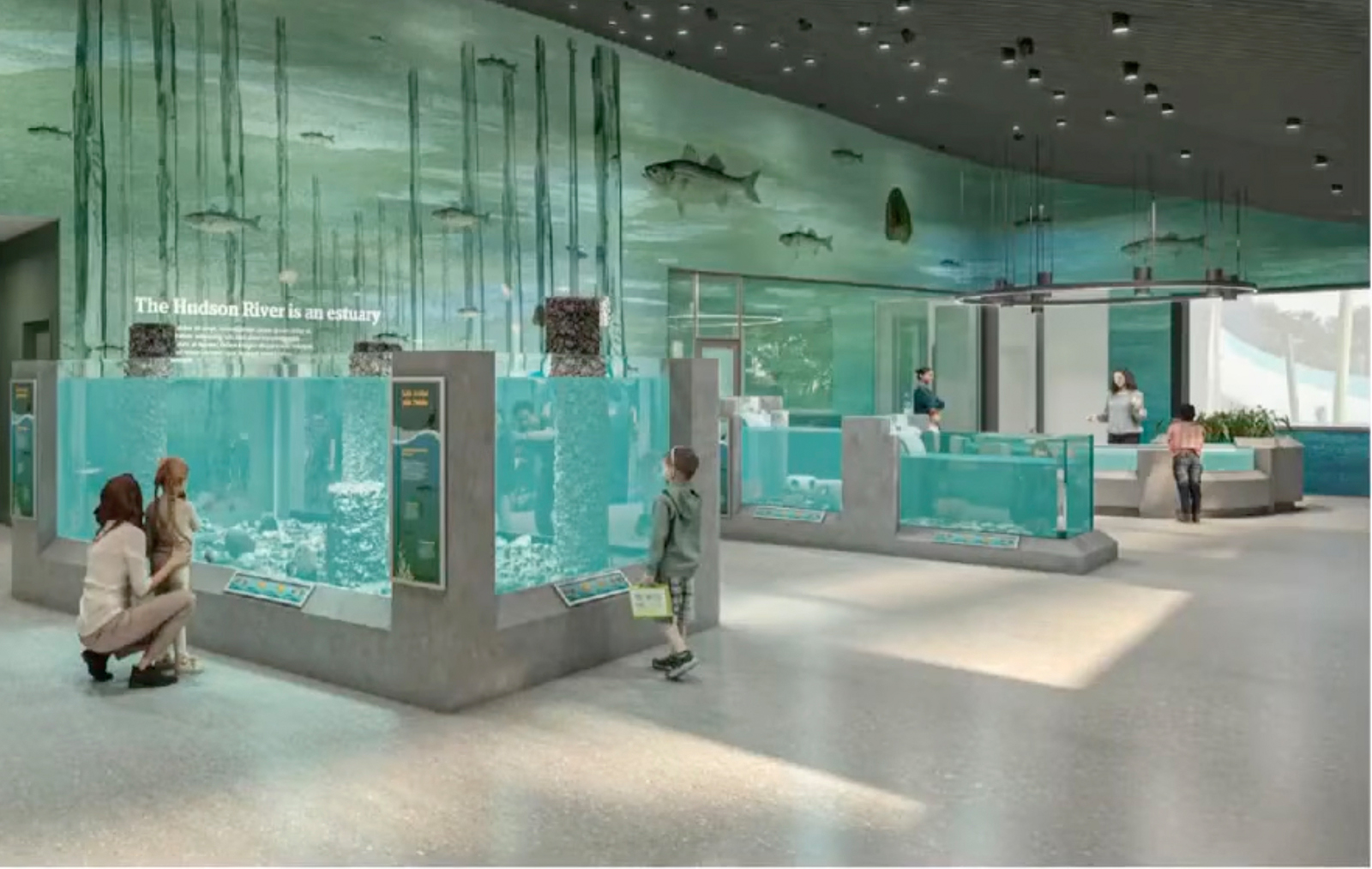
Rendering of the estuarium interior. Water in the tanks circulates from the Hudson and back out again. "We're presenting these habitats in a really fresh way," said Bryan Schuetze, designer of the exhibitions. Rendering: Hudson River Park Trust
Although stymied for years by a funding shortfall, the design for the promised new river study center in Tribeca, with its layout of tanks, exhibits, laboratory, classroom and more, is nearly complete.
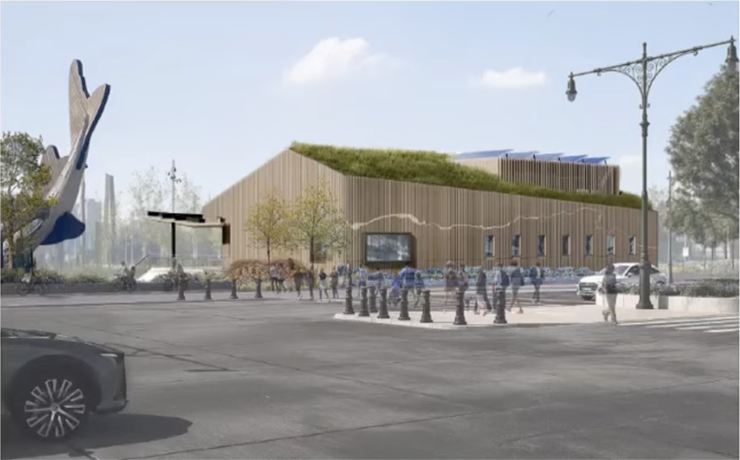
At a meeting of Community Board 1’s Waterfront, Parks and Cultural Committee this month, Hudson River Park Trust staff and consultants behind the creation of the 8,000-square-foot center, known as an estuarium, presented the clearest picture yet of what is to come.
 That is, when the elusive remaining funds can be found. The Trust has about $31 million of the roughly $45 million needed to build out the estuarium, the Trust’s president and CEO, Noreen Doyle, told the committee. “It’s grown,” she said. “And it keeps growing.”
Doyle said it may be possible to start construction before all the money is in hand, an idea that she has broached with the Trust board. In part, she said, it’s a “constructability question” of whether a portion of the building could operate before the entire structure is complete. “Clearly, we don’t want a ruin sitting there without being done,” she said. “But with the 31 million that we have, I think that certainly there would be functional aspects of this that could advance while we look for the balance. And in fact, that might be a desirable way to try to rally people to raise the rest.”
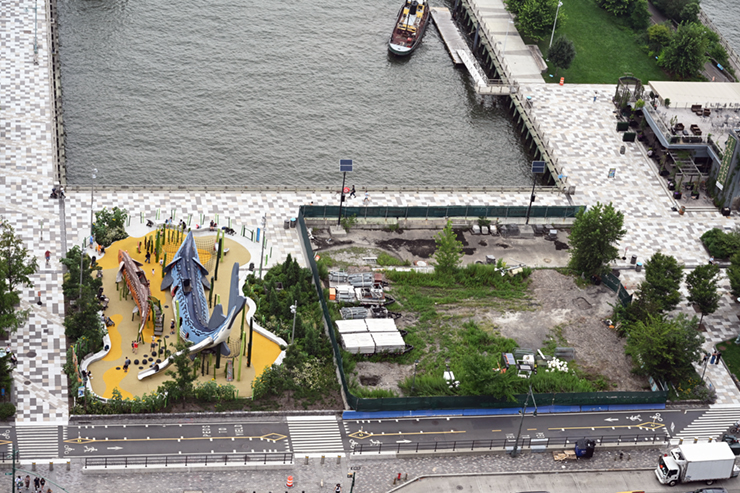 It has been more than 20 years years since the old Pier 26, near Hubert Street, was demolished and its original Hudson River ecology center, The River Project, founded by Cathy Drew, moved up to Pier 40, and later was taken over by the Trust. What had once been envisioned as a 20,000-square-foot, 2-level building with 3,300-square-foot exhibit space, cafe, bookshop, classrooms, lounge and more on Pier 26, has since been scaled back considerably. But the primary mission of providing a standalone center for marine biology research and education remains the same.
At the CB1 meeting, Bryan Schueltze of Space Haus, the estuarium’s exhibition designer, showed renderings (below) of what people can expect to see when they visit.