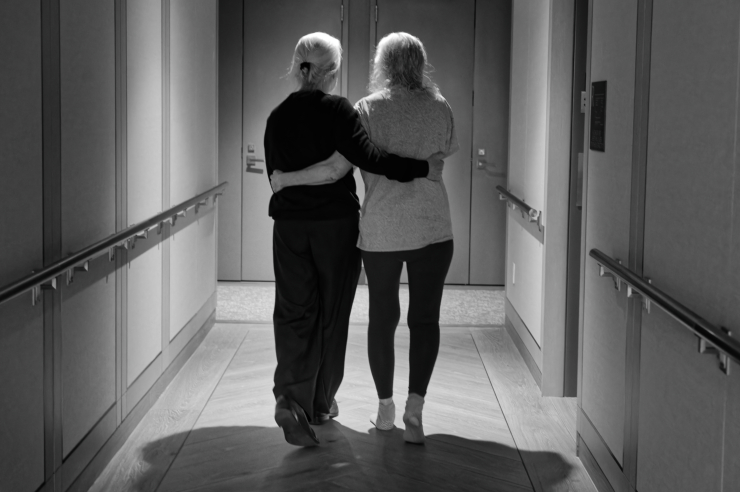
Amid Ravages of Alzheimer's Disease, Devotion Endures. A Love Story.
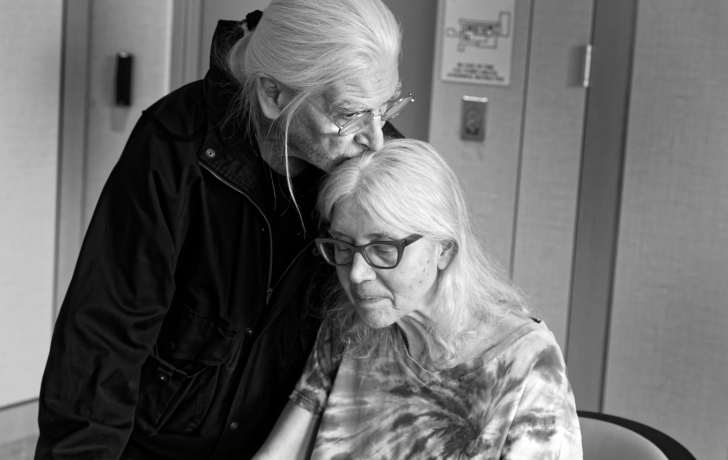
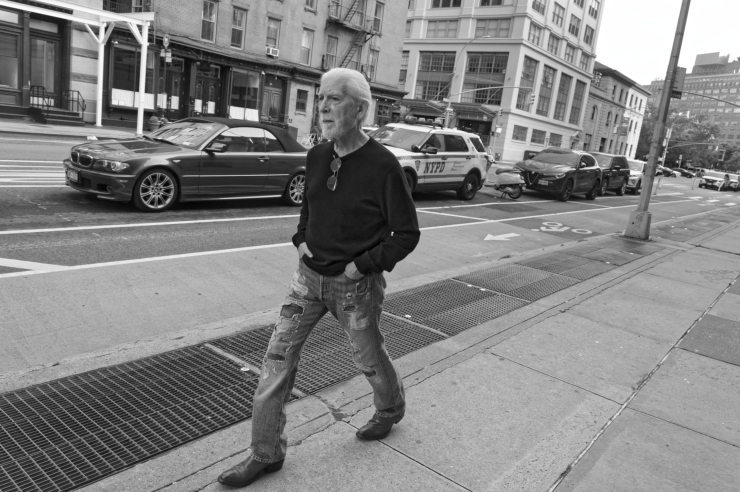
C. Michael Norton visits his wife Ruth Hardinger in the memory care section of Coterie Senior Living, in Hudson Yards, where she has has been residing and cared for since February. Photo: Carl Glassman/Tribeca Trib
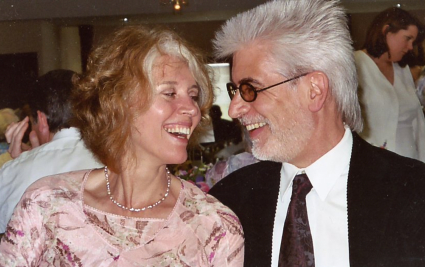
C. Michael Norton and Ruth Hardinger, both 72, had been an inseparable couple for nearly 30 years before Ruth fell victim to the ravages of Alzheimer’s Disease. The married pair, artists who began living together in a North Moore Street loft in 1993, (Ruth moved to the building in 1977), were also partner brokers in the Tribeca office of Douglas Elliman, and for years were among its most successful agents.
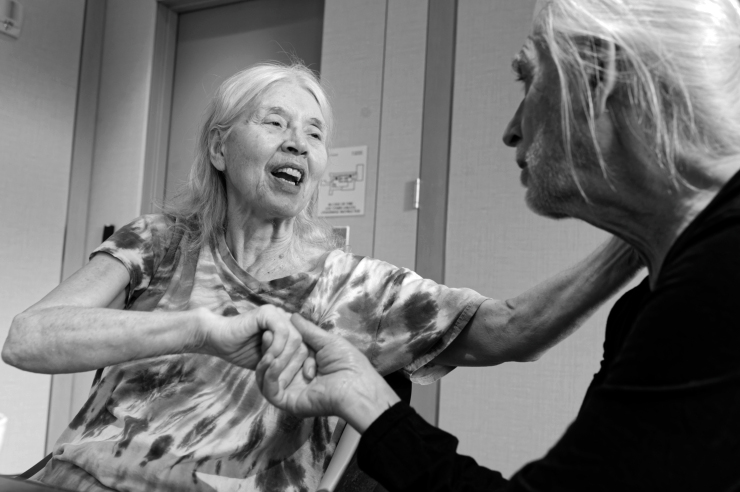
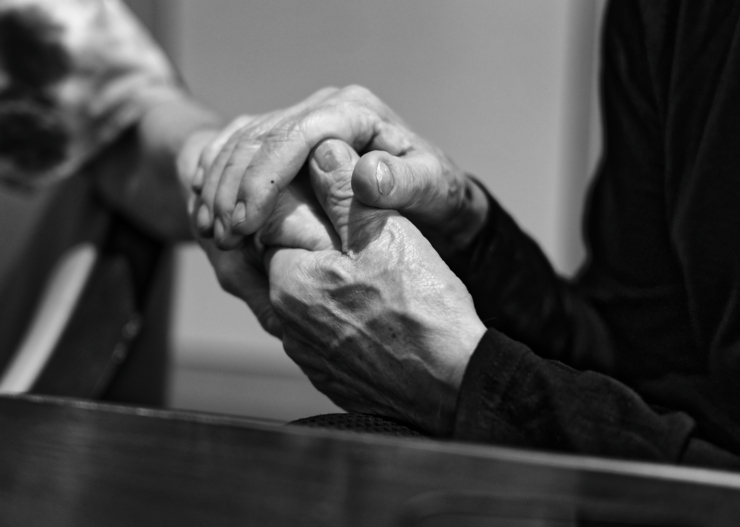
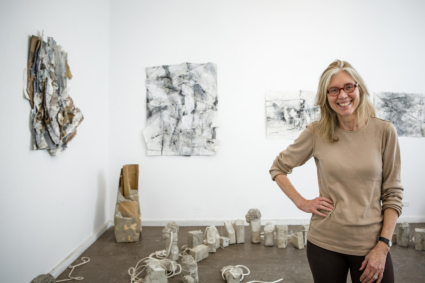 Today, Ruth lives on a memory care floor of Coterie Senior Living in Hudson Yards where Michael visits her several times a week. Her ability to speak is nearly gone, but he still comes to walk with her, to hold her, to do what he can for her. Michael asked the Trib to document this time in their relationship because, he said, “I want people to understand Alzheimer’s and understand what it is to go through something like this—not only for those who have the disease, but for those who love them.”
Following is Michael’s story—a love story—as told to Trib editor Carl Glassman.
Before I met Ruth, I’d never been around anyone who I could spend so much time with. It was amazing. She liked us to have all our meals together. We ate in a café, a restaurant, or at home, and at home she was a gourmet cook. It never was verbalized but it was her way of saying that this is what families do together.
I still expect her to be angry with me every time I go to visit her. If she could, I feel she would think I’d abandoned her. She wanted to be together 24/7.
Ruth was a woman who was embedded in her home, in her marriage and in tradition, and then she was this other person who was an artist, a Fulbright Scholar, could speak Spanish and Ancient and contemporary Greek, worked at the New York Times for 10 years in the advertising department, and could sell real estate.
We collaborated constantly. We talked about art, we talked about real estate, we talked about life. I always had somebody positive in my life; we supported each other.
We were really good working as a team, and what I’m doing now is trying to figure out how to re-make myself as an individual, without her. I took so many years off to take care of her. Now I am back selling real estate so I can pay for her care, along with her 97-year-old mother Rowena, who shares the cost with me. What I’d really like to do, and what I know she’d like me to do, is to just paint and write poetry.
 Ruth’s disease started to reveal itself eight or nine years ago. She would be frustrated by not being able to remember a word or a phrase. Our primary care physician said it was menopause. But it started getting worse. She complained that it felt like there were bubbles in her head. As a broker, she rarely lost a deal. And when deals started falling through, I should have realized something was going on. Around early 2016, the year she was diagnosed, she had an MRI that showed her brain was starting to atrophy and shrink. The plaque was visible. The doctor pointed to his watch and asked her what it was. She didn’t know. He diagnosed her with aphasia, and rapidly advancing Alzheimer’s Disease.
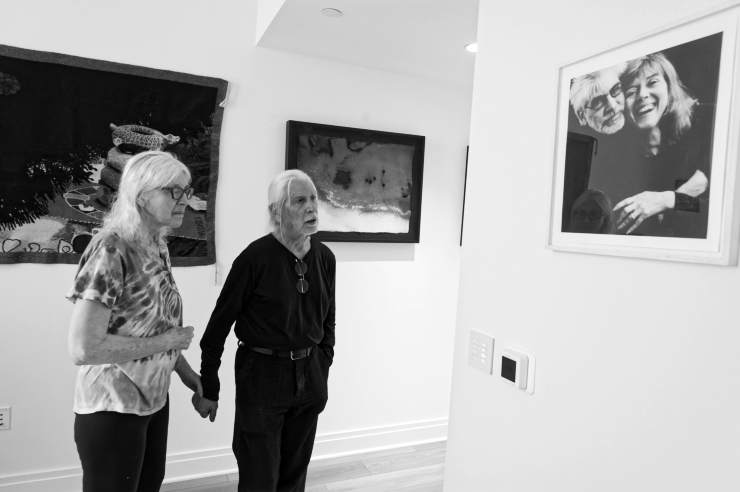 Another doctor advised us not to tell anybody because she could still function. If you tell somebody you have the disease their impression of your functionality will diminish because they have a preconceived idea of what Alzheimers is. We went along with that program for a while until it became impossible. She did her last real estate deal with me in 2017—though the next year she was able to put together a group show, “Planet X4+1,” and a panel in Bushwick with four other women artists who she was close to.
In 2018 and 2019 her condition really started to fall apart. I was able to get her to respond to me but there was never a dialogue.
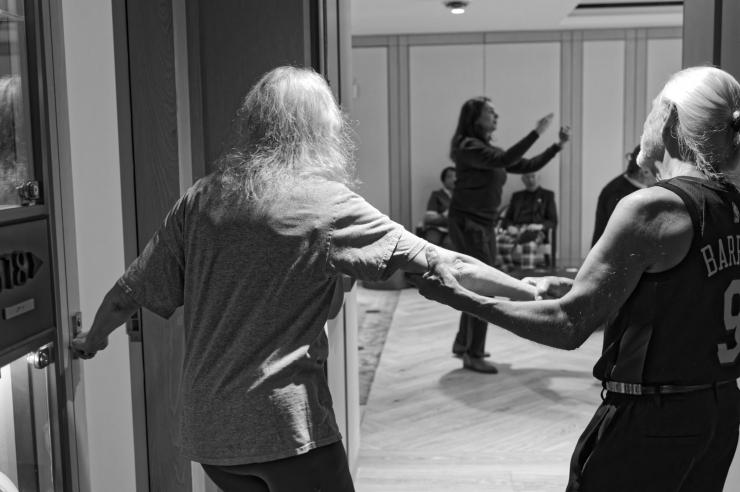 During the pandemic, we’d walk a lot. Every day we’d go from North Moore Street to 23rd Street or farther. I cared for her throughout the course of her disease. But at a certain point I realized I had to get some help. I hired caregivers in October of 2021 and they started coming in from 7 a.m. to 7 p.m. But I still got in the shower with her, washed her hair, and cared for all her bodily needs day and night.
I had to keep my eye on her. At first she was able to cook. She would cook the same thing over and over again. We went to the store almost every day because she said she needed to buy something. We would have 12 cartons of soy milk in our refrigerator, and four or five blocks of cheese. And we would go back down and buy more cheese. I would try to tell her we already had it but it wouldn’t make any difference. She’s always been really stubborn. At a certain point I just gave in. So we had a lot of extra stuff around.
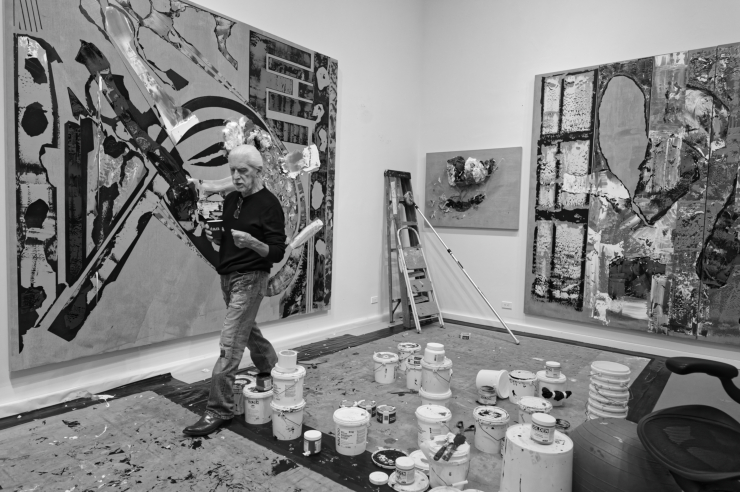
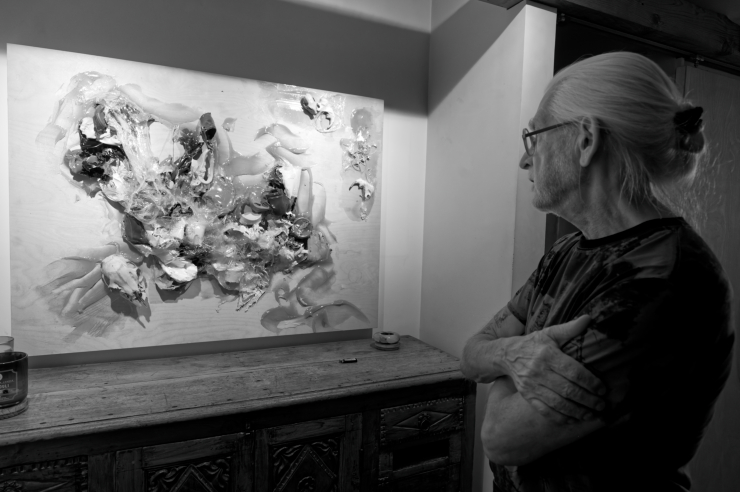
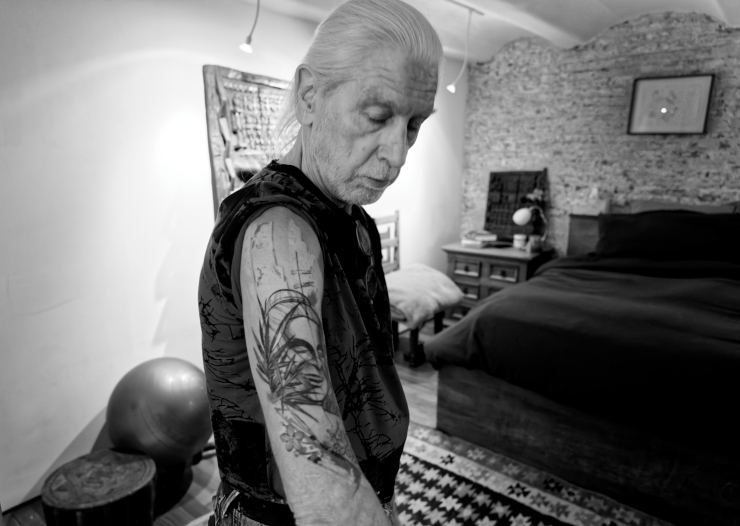 Sometimes, she would get up in the middle of the night and start making breakfast. I had to stay semi-awake so that I could make sure that she didn’t do something dangerous. I turned my back once when she was making dinner and she poured boiling water down her leg. By April of last year I saw that, even with our helpers, I could no longer care for her at home. I first moved her to a memory care facility in New Rochelle, and then this past February to Coterie Senior Living, where I have confidence that she’s getting the best care possible.
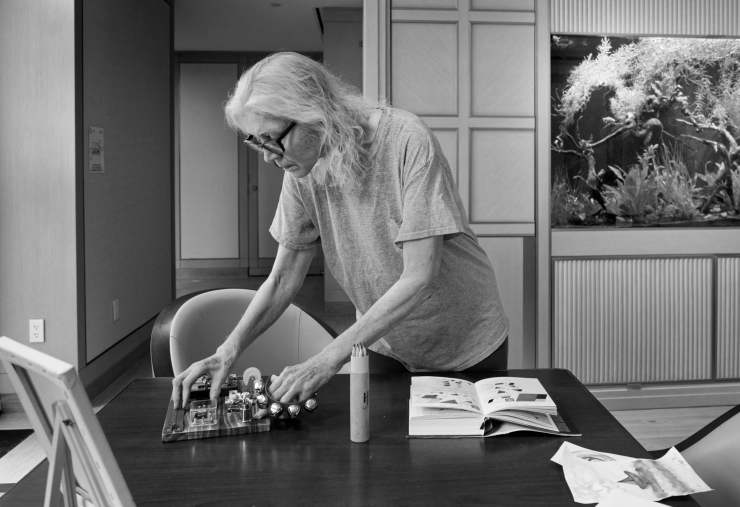 What happens now is she’ll look at me and get really happy but she’ll turn her head away and her attention will go somewhere else. Then she’ll turn around and look at me and all of a sudden it’s like she recognizes me all over again. But after I’m there for a while she’ll get distracted and walk away.
.jpg)
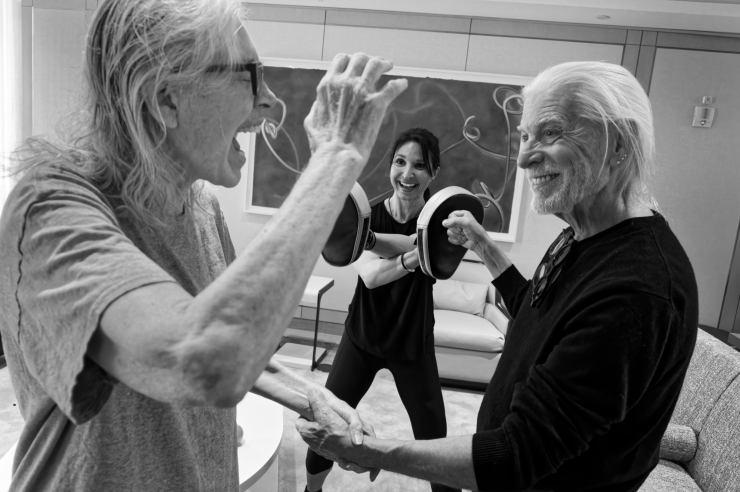
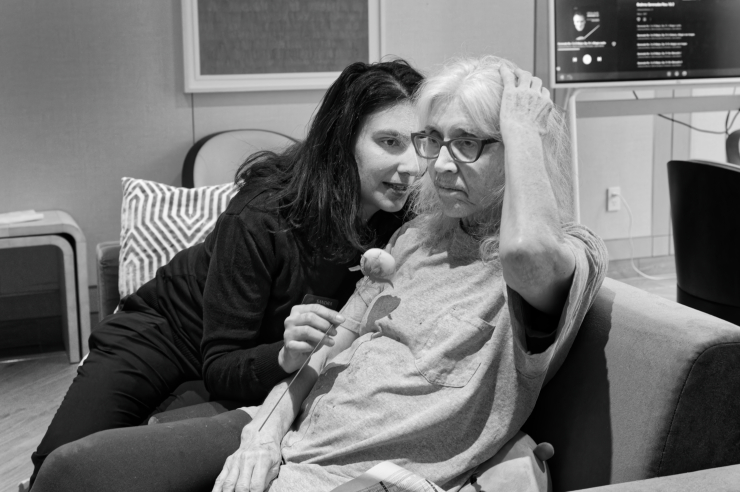 “I love you” are almost the last words she is able to say now. One day she told me she loved me, and then she said, “What’s your name?” The first time that happened it broke my heart.
I never know when it’s going to hurt. I never know when I’m going to start crying. But I don’t try to stop it from hurting either. I try to go with the pain.
Here is one of the poems, called “Overlay,” that I wrote as a way to confront those painful emotions.
Human mirroring human
Unnecessary merging, denying the self
Incorporating others
Completeness abandoned, diluted, I slip away.
Ruth forgot my name she struggled then I reminded her
Michael
That’s who I am, remember?
Like a shotgun blast to my heart.
I maintain my composure my heart loses me
I begin losing myself
.jpg)
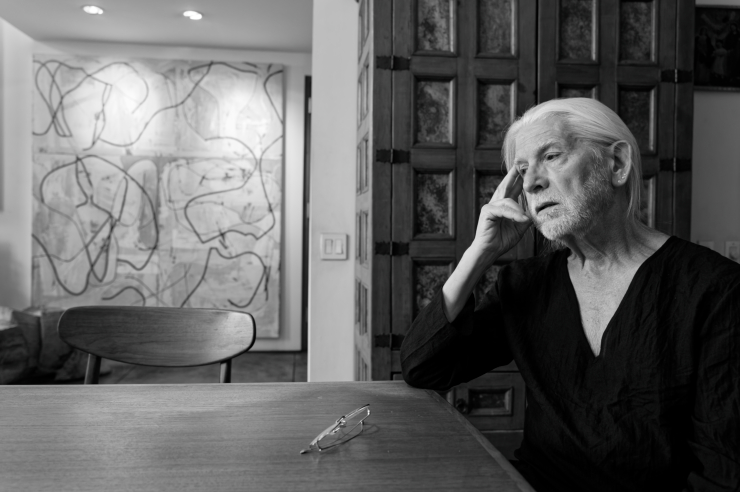 When we started being more and more successful as brokers I began getting a little bit too arrogant and feeling privileged. This has humbled me to the point where I think I’ve actually become a better person. There’s a grace to her illness that I didn’t expect to ever feel. I’ve been writing poetry, reading Buddha scholarship, listening to audio books like Joan Didion who talks about her idea of expecting her husband to come back. It’s taking me years to deal with Ruth’s clothing. At home sometimes, I think I hear her call my name.
 What I would tell others who are presented with this is to embrace it, and get the help you need to get through it. If you try to run away from it, it’ll kill you. Every time I go see Ruth there’s a part of me that says I don’t want to go, because it’s so hard to see her diminish. But I’m incredibly lucky because she has maintained a state of happiness. Or what would appear to be happiness. And when she looks at me I still get that same look I’ve always gotten, that same huge smile.
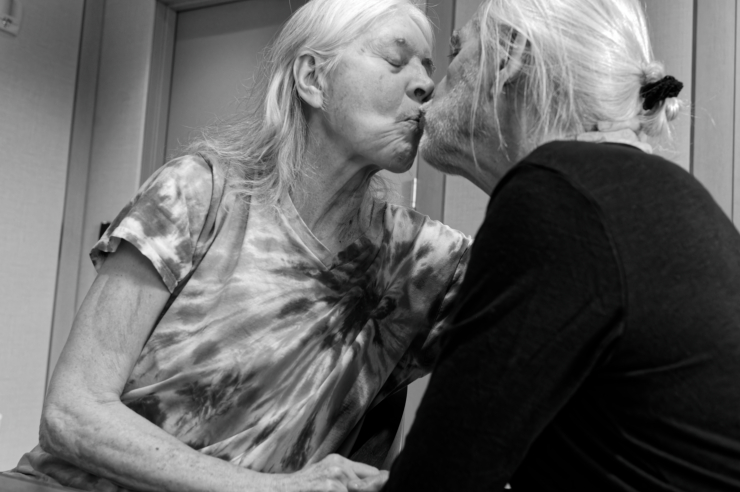
I know that I can no longer talk to her. But if I can still put my arms around her and put my head on her neck or my nose against her cheek, that physical part of her is still there. And that’s what carries me through.