
Call for a Pause: City Set to Review FiDi Space Redo of Potential Landmark
; Paramount Group/KPF (rendering)</p>")
Left: People arriving from the subway into the 60 Wall Street atrium are now met with a view of its postmodern ceiling and columns. Right: Proposed redesign calls for the stairs to be substantially expanded. "Arriving there should be very theatrical and impressive," said the architect, Hugh Trumbull. Critics say the long stairway unnecessarily compromises public space. Carl Glassman/Tribeca Trib (today); Paramount Group/KPF (rendering)
The owners of 60 Wall Street squared off with a Community Board 1 committee this month over the fate of the now-vacant tower’s funky—and potentially landmark-worthy—interior public plaza.
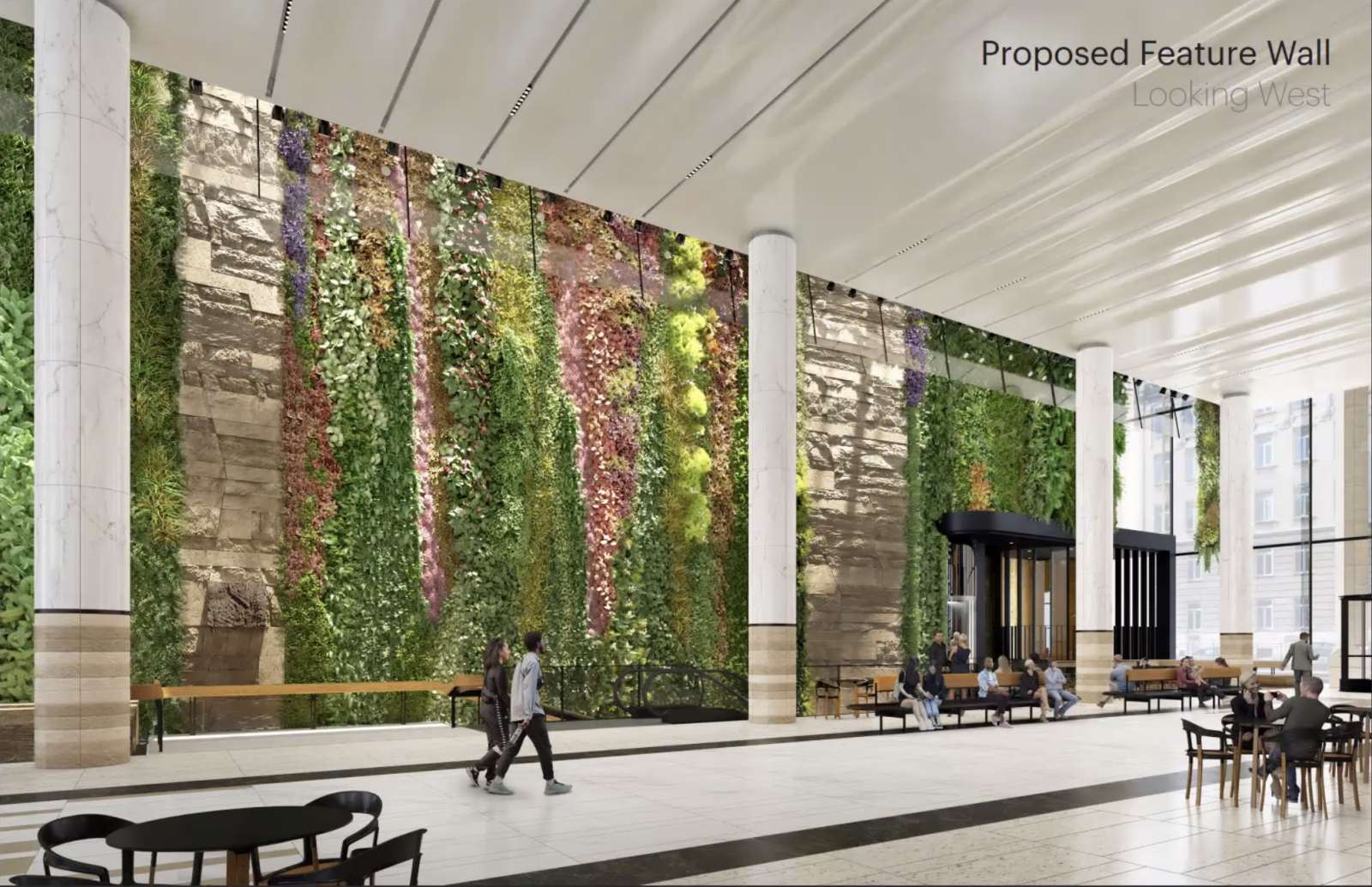
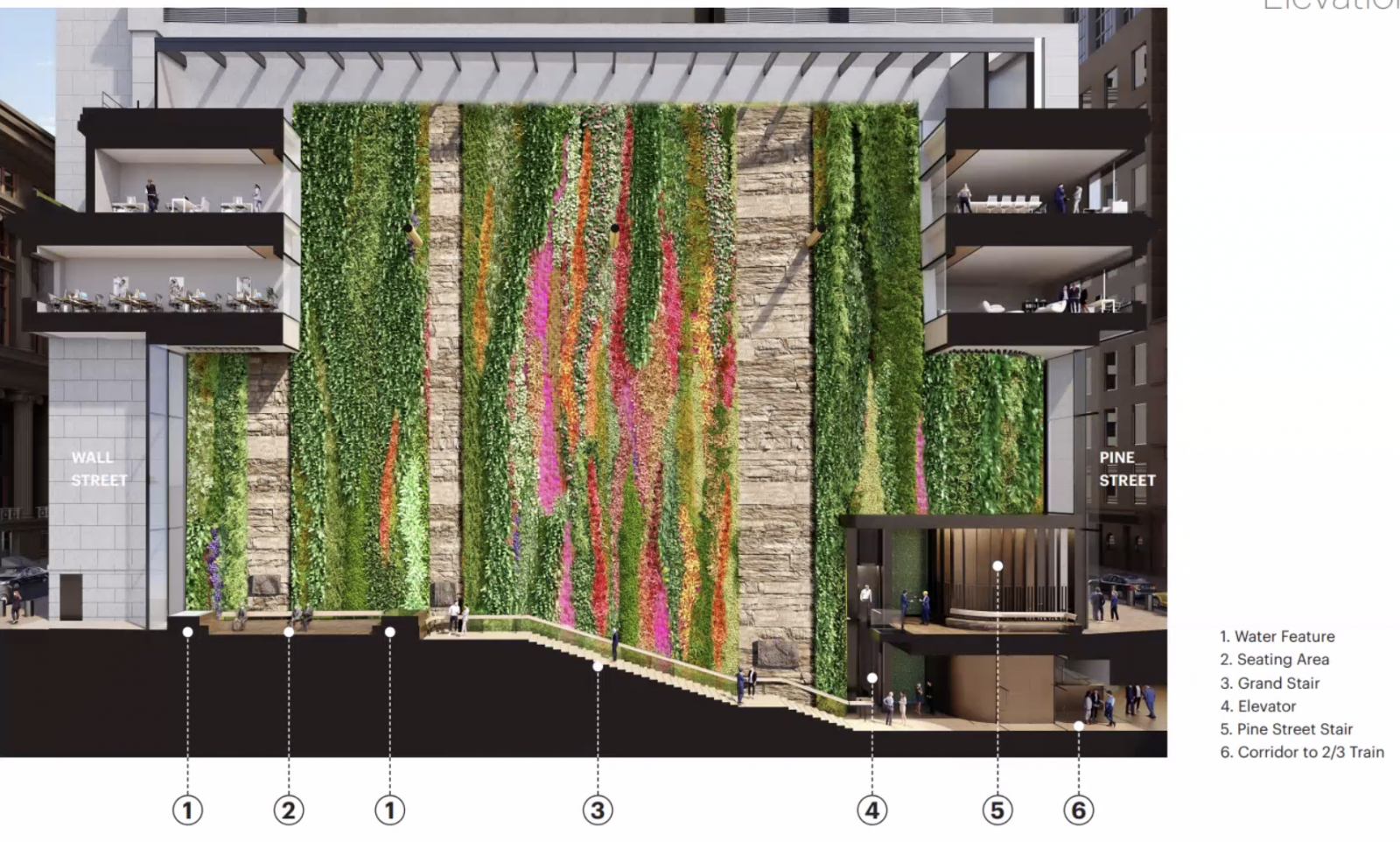
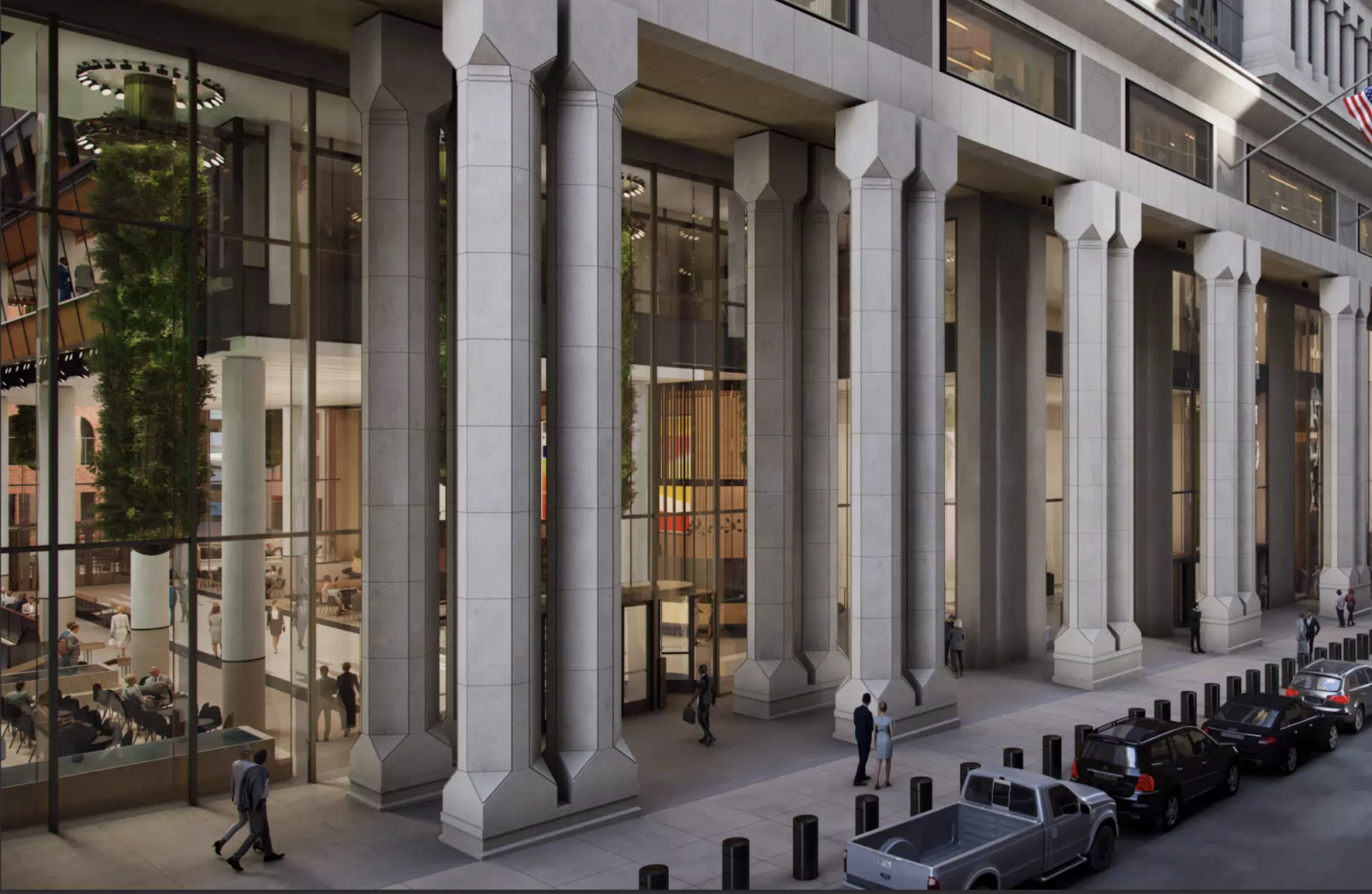
Seeking to attract tenants to the 55-story, 1.7 million-square-foot office tower, owner Paramount Group, a real estate investment trust, wants to remake the current 1980s-era, postmodern atrium into what it sees as a far “grander” space. The total redesign includes, Paramount says, the largest green wall in North America. New seating, much expanded subway stairs, and a large, open restaurant and bar are among other proposed changes.
.jpg "60 Wall Street’s privately owned public space (or POPS) today. It was designed by Pritzker Prize-winning architect Kevin Roche, who also designed the Ford Foundation atrium, a city landmark. Photo: Carl Glassman/Tribeca Trib")
 But preservationists and other critics see much of the 16,000-square-foot space, with its unique architectural features, as historically significant and worth saving as an important example of a postmodern interior. Ten white marble columns rise to a latticed and mirrored ceiling, their flared capitals said to evoke a kind of “Egyptian revival aesthetic.” The decorative granite floor is colorfully patterned in pink, green and white.
The Landmarks Preservation Commission has said that the Kevin Roche-designed privately owned public space, or POPS, is worthy of consideration as an interior landmark, but since last September has remained publicly silent about it. In the meantime, the City Planning Commission is on course to rule on the plan. That doesn’t sit well with CB1’s Land Use, Zoning and Economic Development Committee, which is advisory in the review process. On July 10, following a presentation of the plan by Paramount Group representatives, the committee responded with a resolution that calls on the Planning Commission to delay its hearing on the application until the Landmarks Commission makes a determination on the space’s worthiness as an interior landmark.
 A spokesman for the Planning Commission declined to comment on the committee’s resolution (yet to be ratified by the full board), saying only that a meeting will be scheduled after receiving CB1’s recommendation. A Paramount Group spokesperson did not respond to a request for comment.
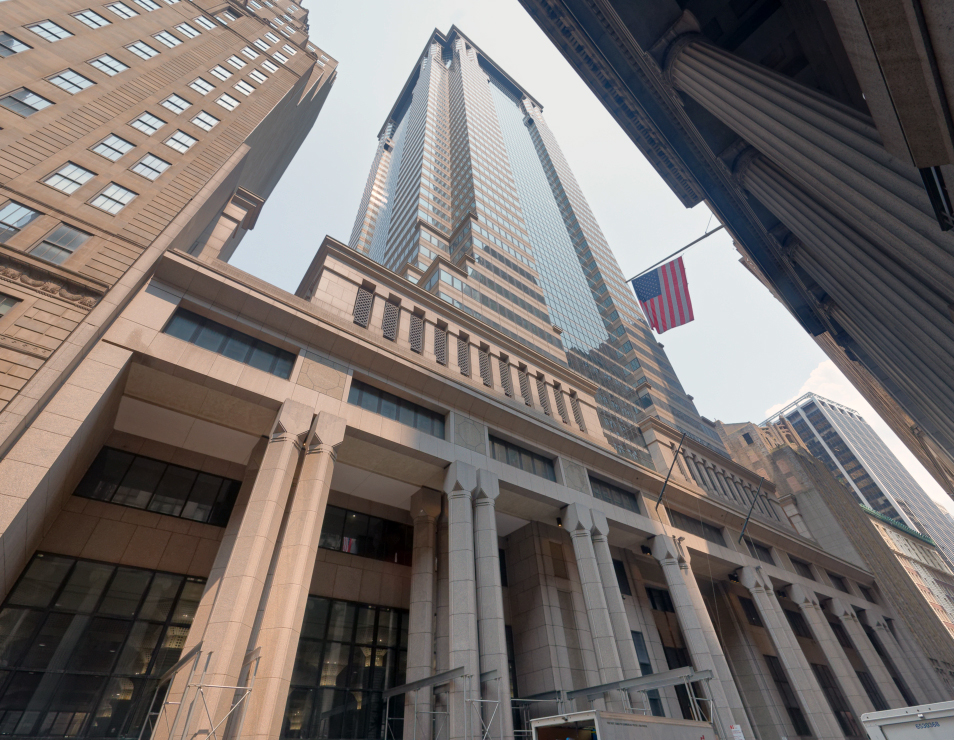
After three tries, Paramount Group in January won Landmarks Commission approval for more modest modifications to the exterior of 60 Wall Street than it had originally proposed, including additional glass to the facade that will bring more light and visibility to the atrium. (Changes to the exterior needed LPC approval because it is required to be in “harmonious relationship” with the landmark 55 Wall Street across the street.)
No one argues that the interior plaza doesn’t need an upgrade. The lighting is dim, there’s no water in the four water features, the “trees” are artificial, stores are empty, and, for many, the space feels unwelcoming. But several committee members as well as preservation organizations and City Councilman Christopher Marte dismiss the owner’s proposal to totally demolish what is there rather than save all, or some of it, with improvements.
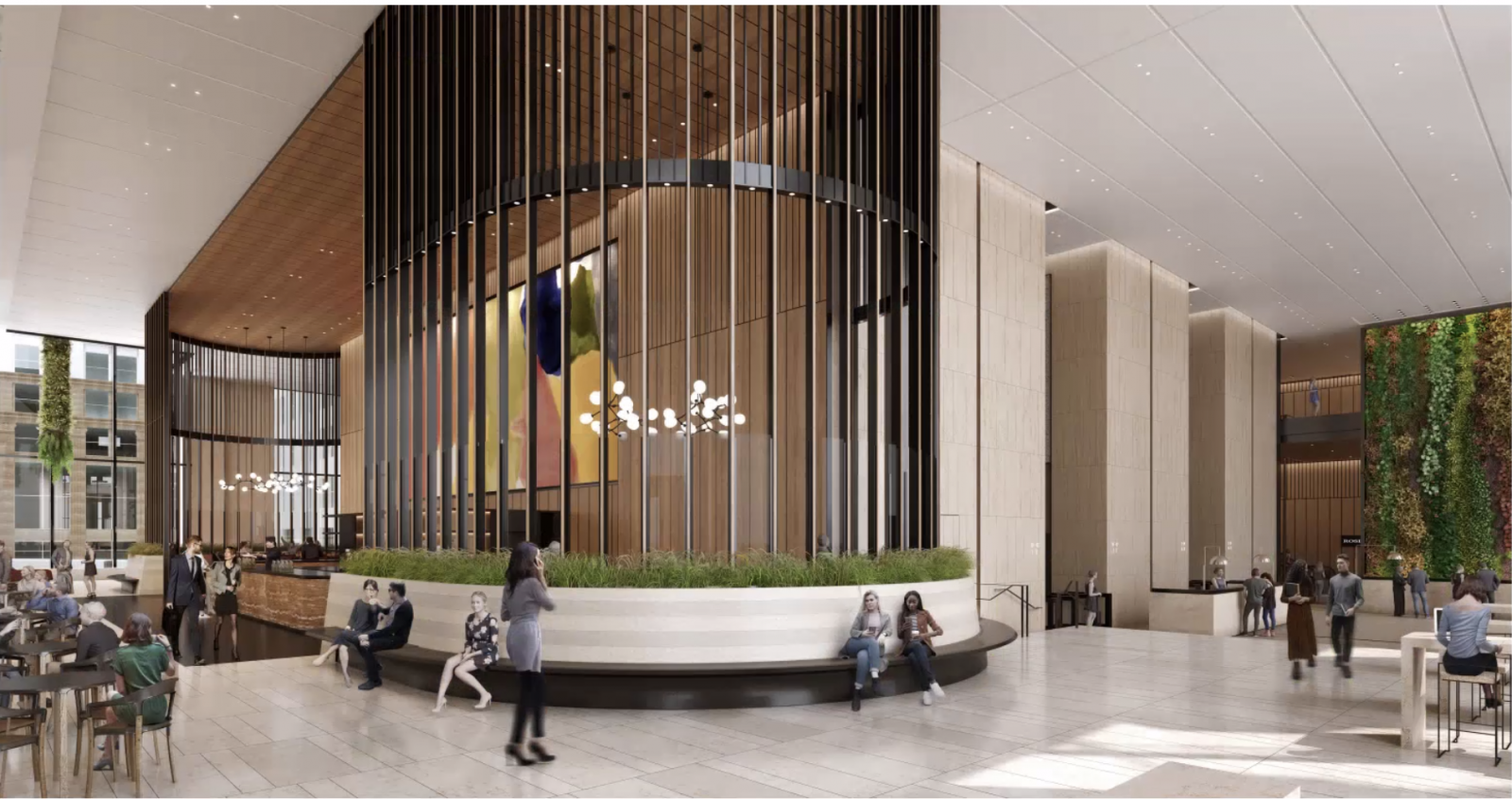 “It’s disappointing that you didn’t recognize that this is a unique, extraordinary, iconic space, whether you like it or not,” committee member Richard Corman told Paramount Group executive Christopher Brandt, and Hugh Trumbull of KPF, the architecture firm in charge of the project. He added, “You didn’t demonstrate that you respected the interior of the space as it currently exists and try to create something that will utilize that.”
“Is there anything in the [current atrium] that could have been preserved to show character and history and modernization, to find a meeting of the old and the new?” said CB1 Chair Tammy Meltzer. “There’s nothing in the new that shows me that. I find that sad.”
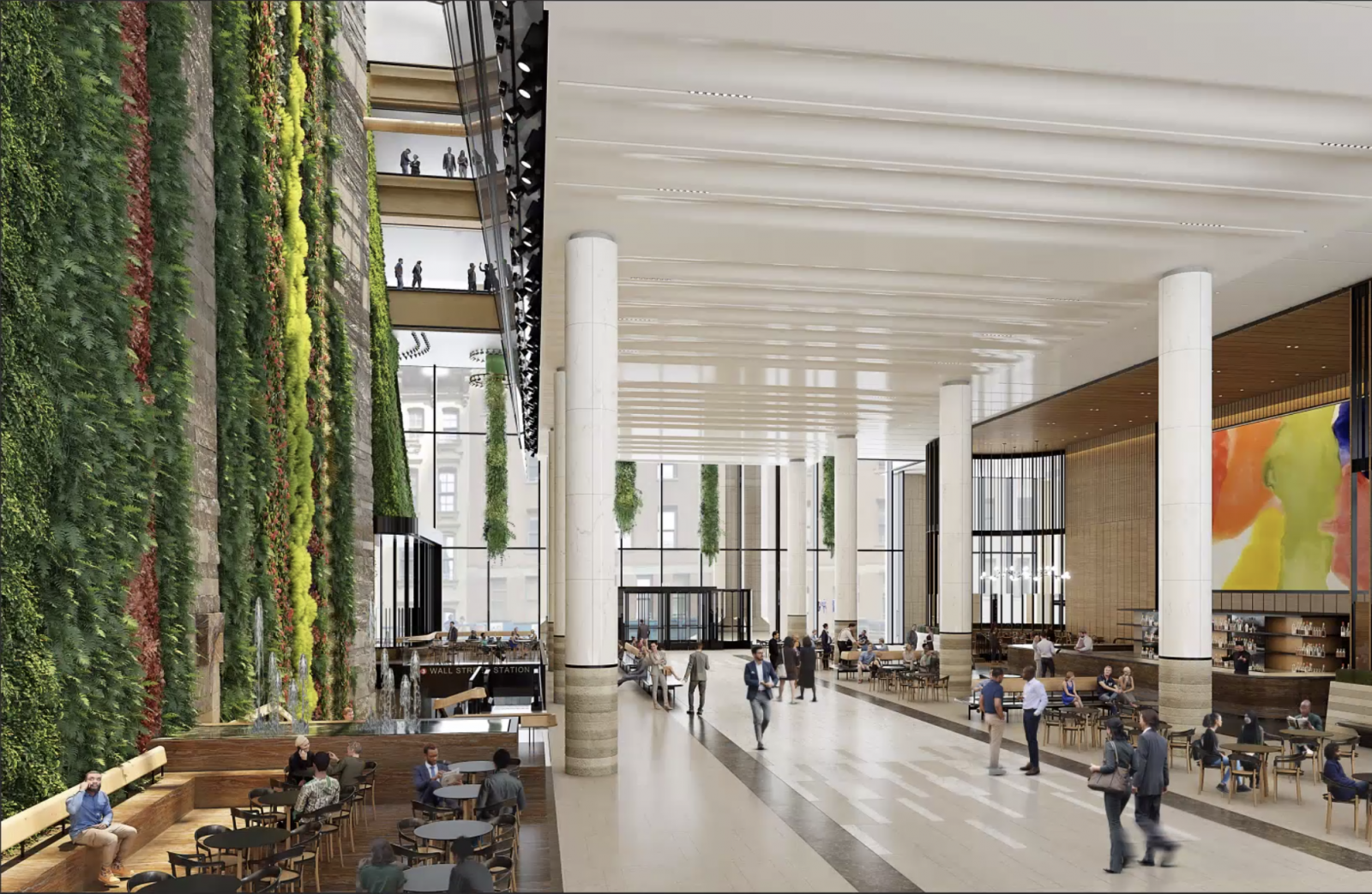 “The feedback we’ve gotten from tenants interested in the space, they want to completely do away with it or they’re not interested in making a long-term commitment,” Brandt responded.
A Landmarks Commission spokeswoman declined to comment beyond her statement in March that consideration of the space as an interior landmark “is only possible within the context of the agency’s priorities, which are determined by a variety of factors including our policy of designating resources equitably throughout the city’s five boroughs.”
The Paramount Group bought the building from its sole tenant, Deutsche Bank, 16 years ago and in 2017 began negotiating a renewal of its lease, which ended in June 2022. Brandt said the public space was a factor in the bank opting to vacate the building and move uptown with its 7,500 workers. “They called it too dark, too dreary, too uninviting,” he said.
Some committee members sympathized with the owners’ efforts, and welcomed a remaking of the space. Attracting businesses, said Colin Mahoney, “is what rules the recovery for Downtown, not 30-year-old, historical—whatever that room is.”
 “I’m going to applaud you for taking this on,” said Rosa Chang. “I don’t think you have a choice because if you have 1.7 million square feet of empty space and you are not able to attract the people who are going to be able to use that space then we are leaving an incredibly big hole in the heart of Lower Manhattan.”
But while expressing no affection for the current design, Chang said the architects had a ways to go in making the redo approvable by the board. Among her points, which were included in the committee’s resolution, was a need for spread-out seating areas, keeping the two escalators to and from the subway (the plan calls for one), and creating retail that doesn’t appear to privatize public space.
Committee co-chair Laura Starr, a landscape architect, objected to the green wall as both difficult to maintain and a poor substitute for lushly greening the rest of the space. “It would be better to maintain, helps better with the sound, and it creates real spaces, warm spaces because this looks like a very polished corporate space.”
“I feel like it’s lost some of its soul,” she added.