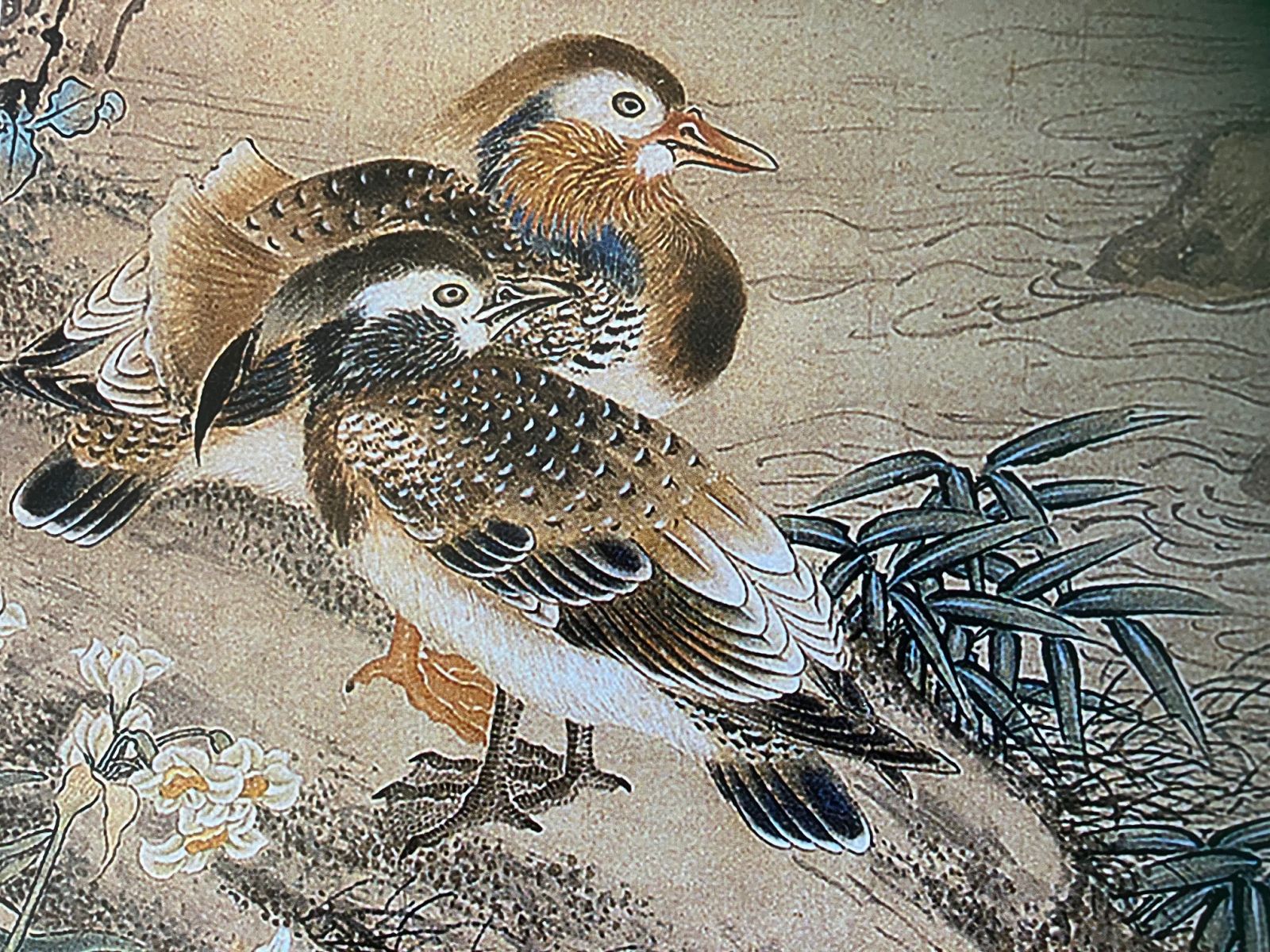
Chinese Flower-and-Bird Painting, a Major China Institute Exhibition
, by Yun Bing. Changzhou Museum. Right: Ma Quan, "Flowers and Insects," 1752. Album of 12 leaves; ink and color on silk. Tianjin Museum</p>")
Left: Detail from "Grand Hall of Jade and Affluence," (date unknown), by Yun Bing. Changzhou Museum. Right: Ma Quan, "Flowers and Insects," 1752. Album of 12 leaves; ink and color on silk. Tianjin Museum
Willow Weilan Hai, the lead curator of the China Institute's current exhibit, "The Art of Chinese Flower and Bird Painting, 1368-1911," was standing in front of a 40-foot long silk scroll (21 feet of it unfurled) and recalling the first time she saw the paint ing.
ing.
"I was at the Tianjin Museum in China where I heard they had a great piece. I asked to see it and they took it out of storage to show me. When they opened it up I was amazed at the artwork, the composition, the very unique modern concept."
The painting was the work of Bada Shanren, a member of the Ming Imperial family when the Manchu invaded China in 1644. Then 19, he survived by hiding in a Buddhist monastery for nearly 30 years.
"I curated the entire exhibition just for this piece," Hai said.
"Flowers on the River," named after Shanren's scroll, is the largest show of flower-and-bird paintings, one of three major genres of Chinese painting along with landscape and figures, ever mounted in the U.S. There are more than 100 pieces by 59 artists.
The show follows the slow evolution of the flower-and-bird painting genre, from silk scrolls to rice paper, from refined brushwork to freehand, as well as the introduction of ink drawings and expanded subject matters.
From its beginnings, the artists appealed to their audience through a heavy use of symbolism. Fish represents abundance. Flowers are a reminder of prosperity, long- tailed birds and ducks speak of longevity. Bamboo and spider tells the observer to be happy with what they have. The red plum flower, which blooms after a long hard winter, shows vigor and endurance.

But even for viewers who don't know these cultural references, the show, Hai said, "is for everyone who loves beauty."
One visitor, Hai recalled, told her she was "honored" to discover the work. Another said the paintings reminded her of Beethoven's 9th Symphony.
Comments like those, she said, "really touched my heart."
"Flowers on a River: The Art of Chinese Flower and Bird Painting, 1368-1911" is at China Institute, 100 Washington St. (enter at 40 Rector) through June 25.