
The City's New Composting Program: What You Need to Know
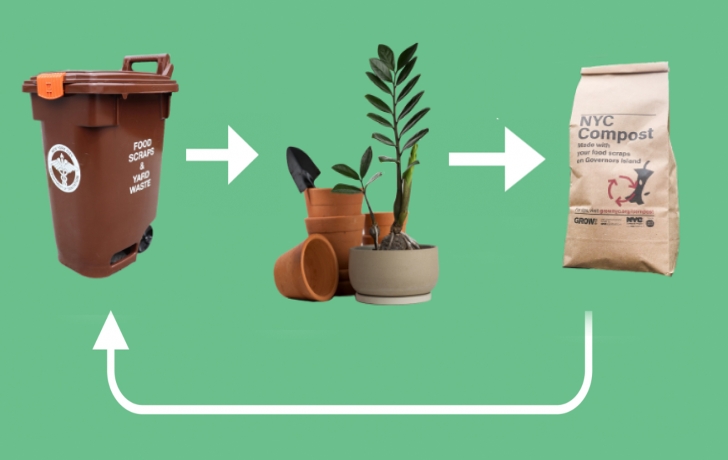
Food scraps and plants go into Sanitation Department brown bins for curbside composting. The compost from those throwaways go to growing plants and fresh produce at home or in community gardens. Source: Office of Manhattan Borough President Mark Levine
Every day one-third of the food scraps and yard waste that New Yorkers throw away end up in landfills, releasing climate-changing methane gas as it erodes. Beginning Oct. 6, the city begins its mandatory curbside program that will allow organic trash to be turned into compost for gardens and plants. It can also be made into fertilizer and clean energy gas.
The free program was piloted in Queens and planning for its city-wide rollout began back in 2022 when elected officials saw it working “exceptionally well.” In a letter, they called on Sanitation Commissioner Jessica Tisch to bring the program to the other boroughs. “We cannot delay expanding this service,” they wrote.
Here’s what you need to know.
• Buildings are required to separate food and yard waste from regular trash. Beginning next April, fines can be levied for non-compliance.
• Composting is picked up the same day as recycling.
• Along with food scraps (including bones), food-soiled paper products can go into the composting bin.
• Other composting options, such as the city’s “smart bins,” will remain available.
• Waste is placed out after 6 pm in a bin of 55 gallons or less with a secure lid, or after 8 pm if bags are put directly on the curb. Only clear bags can be used.