
Daughter 'Forges a Connection' to Dad Through His Famed 1952 Book

Linda Secondari and a poster of the Oscar-winning movie adapted from her father's novel, "Coins in the Fountain." Photo: Carl Glassman/Tribeca Trib
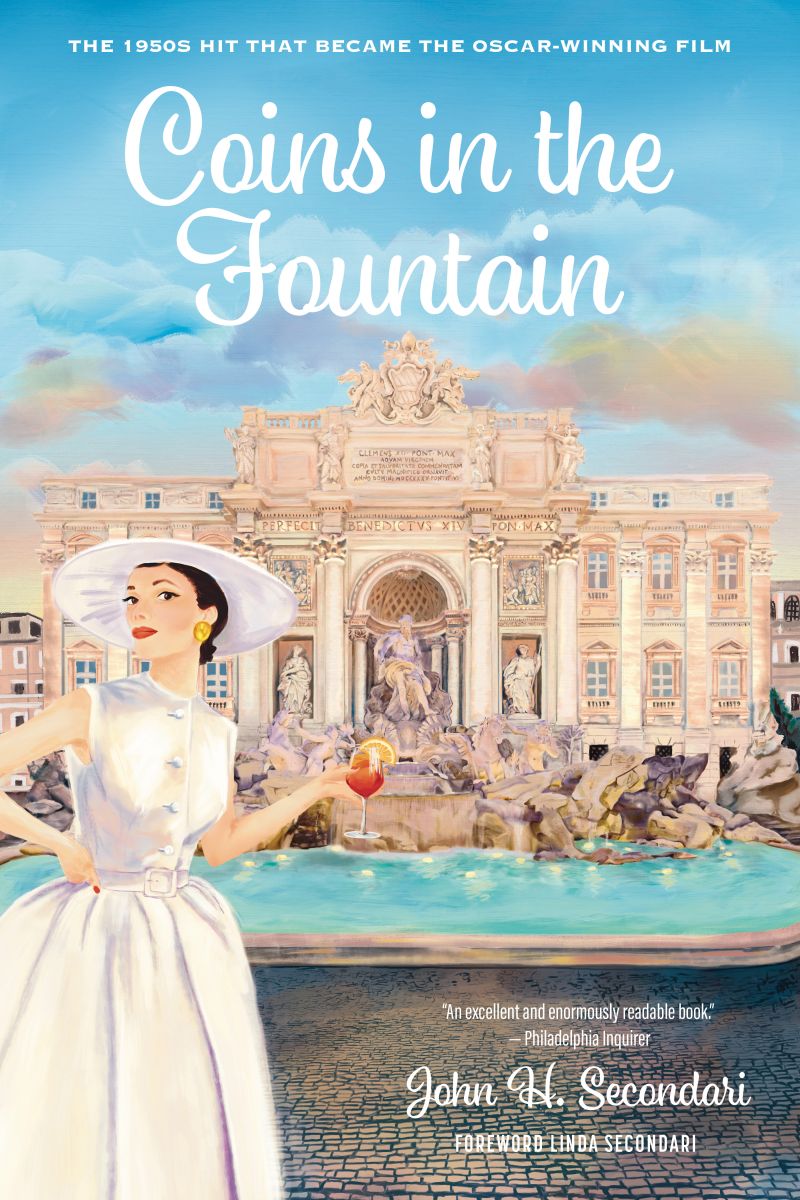
Linda Secondari, a resident of Tribeca for 26 years, recently reissued the 1952 best-selling novel “Coins in the Fountain,” written by her father, John H. Secondari. The formerly out-of-print book, adapted into the Academy Award-winning film “Three Coins in the Fountain,” made Rome’s Trevi Fountain a global icon and spawned the Frank Sinatra song by the same name. Secondari’s father died when she was young, and in this essay, adapted from the reissued book’s foreword, she writes of her desire to “forge a connection” with him through his famous work.
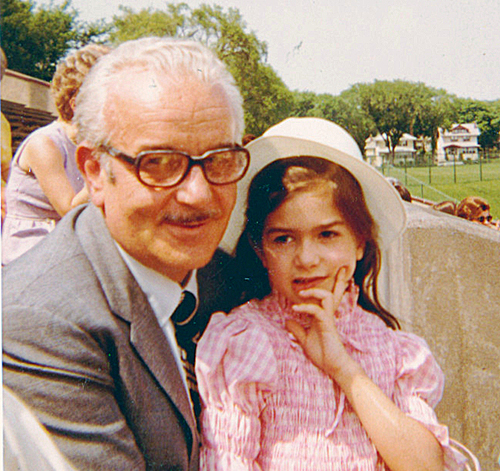
When I was nine years old, my father, John H. Secondari, died. I don’t have many memories of my dad, but the few I have are vivid: the rhythmic clacking of his typewriter keys in the distance (and my mom’s warning not to disturb him while he was “making money”); him teaching me how to stir risotto as I stood on a stool stoveside; and fly fishing with him at dusk with frogs chirping in the background.
 As a child, I understood that tossing coins into fountains was somehow deeply rooted in my father’s work even though I didn’t understand how. It wasn’t until much later that I appreciated the impact of the book he wrote—”Coins in the Fountain.” Not only did it inspire both the Academy Award–winning film “Three Coins in the Fountain” and a song sung by Frank Sinatra but it launched Rome’s iconic Trevi Fountain into the imagination of so many people.
By reissuing this famous book I'm not only preserving my father’s literary legacy but also exploring the man behind the words. This project is more than a literary endeavor; it’s my attempt to forge a connection with the father I barely knew. As I pored over the manuscript and produced the book, I engaged in a conversation with my father, one that transcended time and allowed me to understand him in a way that was denied by his abrupt death by a heart attack in 1975 at the age of 55. It has been a bitter-sweet process, filled with moments of joy, surprise, and occasional discomfort as I confronted the realities of a different era.
“Coins in the Fountain” is a snapshot of a bygone period, a time when American optimism reigned and Rome was a playground for expats in search of love and adventure. As I revisit the story through contemporary adult eyes, I see, on the one hand, a charming romantic comedy that captures the elegance and hope of postwar Europe. On the other, it reflects societal norms and expectations about women’s roles that gave me pause.
 My father appreciated and respected women; he married two accomplished women. His first wife, Rita Hume, was a war correspondent for the International News Service and the mother of his first child, John Gerry Secondari, my brother. His second wife, Helen Jean Rogers, my mother, was a Harvard professor, TV producer, and activist.
Nonetheless, I noted in the book that my father had a deep appreciation for not just the female brain but also the power of a woman’s beauty and physical presence. The women depicted in Coins in the Fountain are liberated for their time; they are professionals (mostly secretaries) living abroad. Yet their abiding dream is for love and marriage. This singular motivation makes me uncomfortable as a contemporary woman. A good deal of my discomfort results from the current environment around women’s rights. I feel that we haven’t made nearly as much progress as I would like and I bring this disappointment to my reading, as will some of you.
My father’s life was a study in contrasts. Born in Rome, he emigrated to the United States at age five. He maintained a deep connection to his Italian heritage while fully embracing his American identity. He was a serious newsman who wore fedoras at a jaunty angle, a hunter, a romantic, and a war veteran who penned what is essentially a love letter to his native Rome.
As “Coins in the Fountain” finds its way to a new generation of readers, I hope they’ll be transported to the Rome of the 1950s, with its promise of romance and new beginnings. But more than that, I hope they’ll see, as I have, the universal themes that make this story timeless: the search for love, the desire for belonging, and the transformative power of place.
This journey has allowed me to see my father not just as the larger-than-life figure of my childhood memories but as a man—a writer, a romantic, a man of his time. In reissuing “Coins in the Fountain,” I’ve found a way to resume my relationship with him, even understand him better.
For readers today, I hope they toss their own metaphorical coin. Make a wish, dream of Rome, and allow themselves to be swept away by the enduring magic of both the Eternal City and my father’s words.
“Coins in the Fountain” includes Linda Secondari’s own cocktail and cicchetti recipes. It is published by her imprint Studio Secondari and is available through Bookshop.org and other on-line sellers.