
Giant Mahjong Festival Draws Diehards from Around the Country to BPC
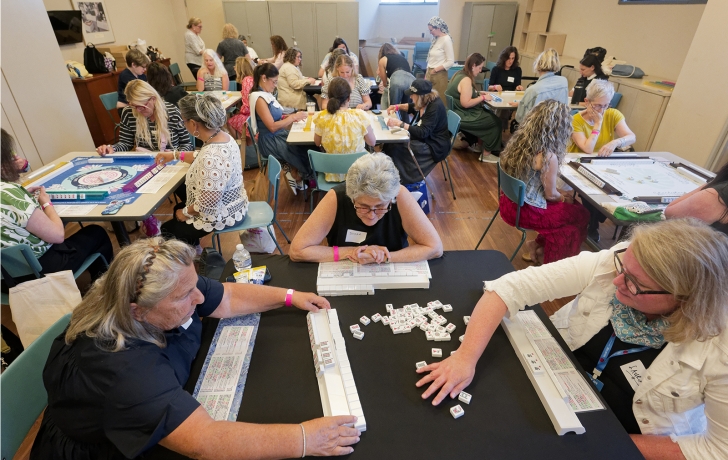
There were mahjong games galore during the two-day festival last month at the Museum of Jewish Heritage. Photo: Carl Glassman/Tribeca Trib
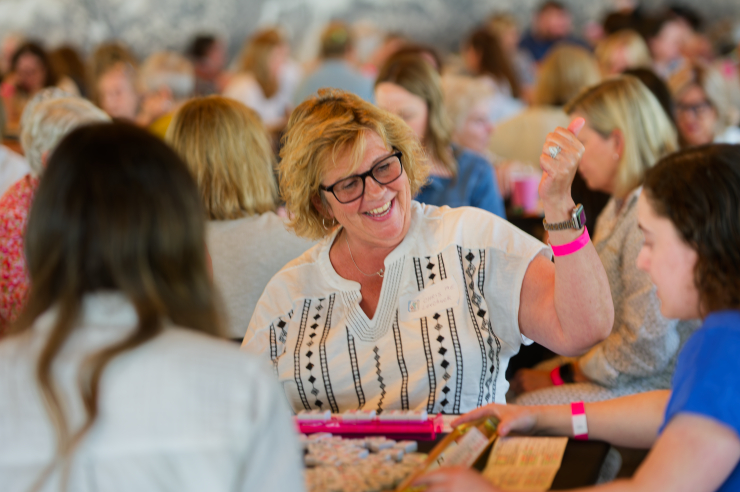
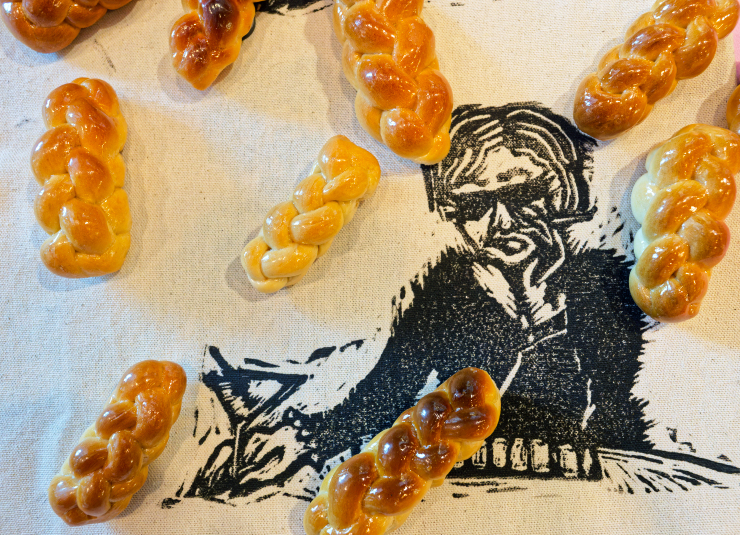
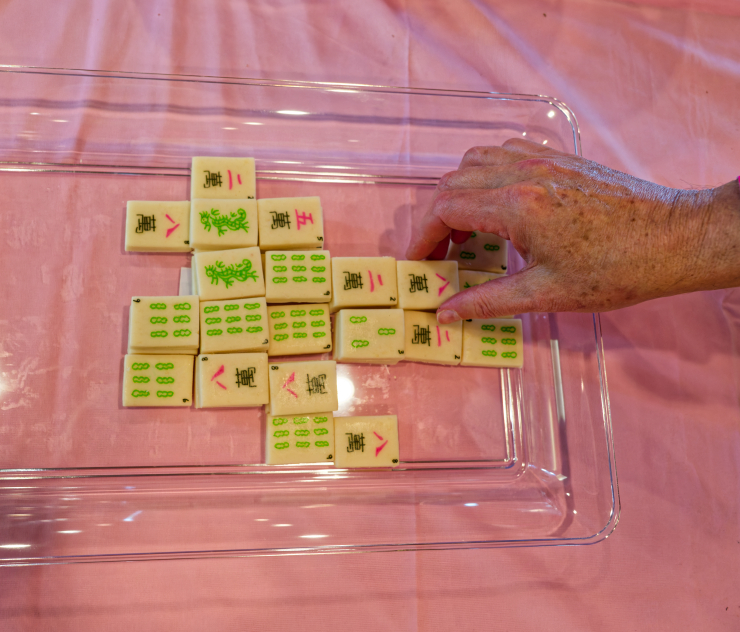
For two days last month, the Museum of Jewish Heritage in Battery Park City became a mahjong mecca. The first annual New York Jewish Mah Jongg Festival drew 350 aficionados, mostly women, from around the country and featured lessons, panels, and mahjong swag (from t-shirts and tote bags to lookalike mahjong tile cookies).
And, of course, there were lots of games. Hundreds competed in tournaments held in the museum’s enormous events hall overlooking New York Harbor. The festival not only sold out, but had a waitlist.
Yes, mahjong is back, and in a big way.
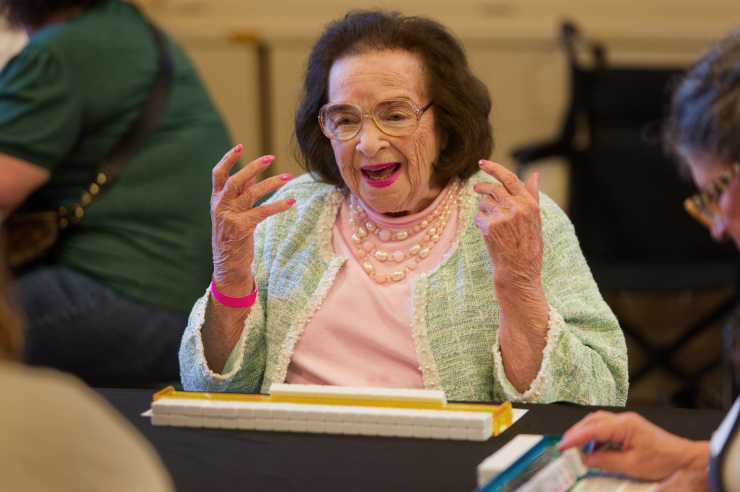 Samantha Ravens came with her grandmother, Judy Mindell, who was three weeks away from her 99th birthday. Ravens is a beginner, but Mindell has been playing mahjong since 1950 and said that over the years she has taught hundreds of people how to play. Mindell said she loves the game as much today as when she played for money as a young housewife in Springfield, MA.
“In our early days of marriage, nobody had much money. We were all kind of struggling. I think we came with half a dollar in nickels and dimes and quarters.”
Mindell was playing a pickup game with three younger women she’d just met. One of them, Kelly Ritchie, said that part of the beauty of the game is the community it fosters among women of all ages.
 “You just go and get to be with your girl community, and it grows and grows, and it’s just beautiful,” Ritchie said. “All of a sudden it’s 10 years later, and you’ve been with the same set of gals every Wednesday night.”
Iris Glassman was there, too, though she admitted that she had not always been a fan of the game. She only became interested in mahjong when her granddaughter, Lexi Mann, started playing. Mann attended the festival with her mother and grandmother, and recounted how she introduced them to mahjong.
“When I was in college, one of my roommate’s mom played, and she taught us all how to play. And then during COVID, I was like, ‘Oh, my God, you’re all gonna love mahjong, so let’s all play together.’ And now we all play.”
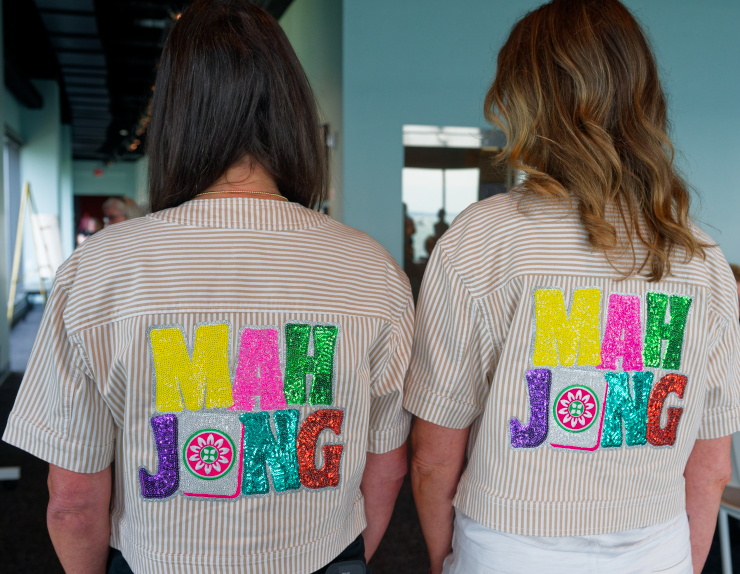
Katy Krevsky and Meg Makuch of Harrisburg, PA., attended in matching vests, with the word MAHJONG colorfully emblazoned on the back. Friends since 2nd grade, they’ve been playing and teaching the game together for 26 years. “We’re just having a good time being together and sharing the love of mahjong with tons and tons of people that are, you know, coming out of the woodwork, just so interested in the game,” Krevsky said.
“And when we teach,” Makuch added, “we try to coordinate our outfits.”
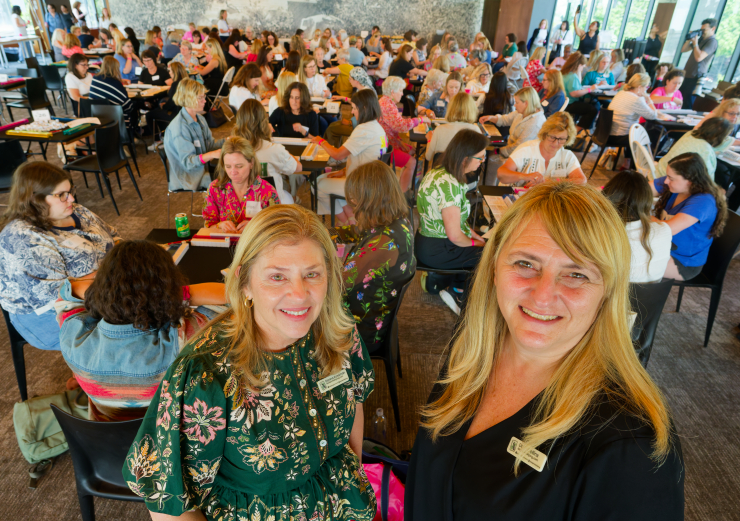
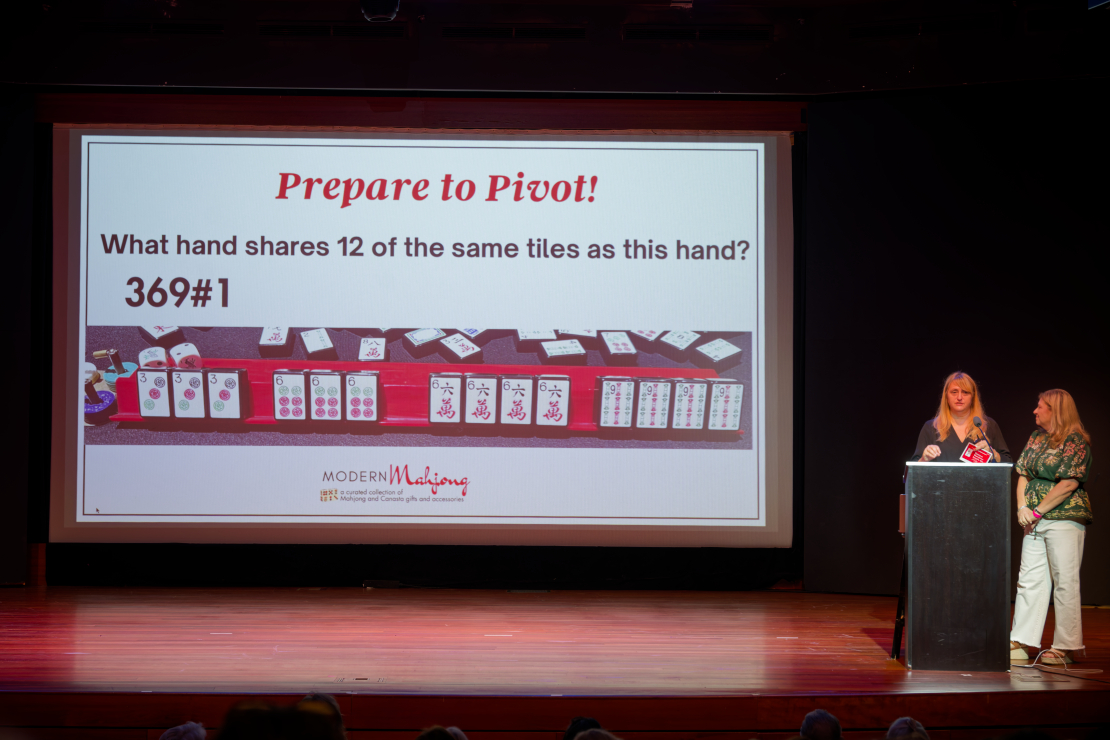 The festival’s two main organizers, Dara Collins and Donna Miller Kassman, are superstars in the mahjong world. (The two first collaborated with Kveller, the digital Jewish publication that organized this event, giving popular online lessons during the pandemic.) Their Instagram account, modernmahjong, now has nearly 25,000 followers.
Mahjong has been around in the U.S. for about 100 years. The game originated in China during the Qing Dynasty (1636-1912) and was played mostly by men. In 1922, an American Standard Oil executive discovered mahjong while stationed in Suzhou, China. He and his wife were said to have enjoyed it so much, they decided to bring it back to the U.S. to market it. Mahjong caught on in many communities, particularly among Jews. Modern Mahjong’s Dara Collins says it traces back to the Borscht Belt.
 “When people would go on vacation, I mean, this is so stereotypical, but the moms would play during the day. The husbands would be away, they come on the weekends. And it just kind of grew through all the different bungalow colonies in the Catskills.”
Mahjong is still popular in the U.S. in the two communities that historically fueled its global popularity: Chinese American and Jewish. In fact, to this day, its most prominent formats are Chinese (or Hong Kong) Mahjong, and American mahjong.
Amy Albertson, another mahjong influencer (50,000 followers on Instagram), led a panel at the festival called “Chinese & Jewish Connections to Mah Jongg.” Half Chinese and Jewish herself, she grew up playing both versions, which are very different.
 “When I was a little kid,” she said, “my Chinese grandma taught me how to play [Chinese mahjong]. And my Jewish grandma, Brooklyn born and raised, she also plays, but she plays with her [Amerocan-style] mahjong group and they’re very advanced.”
This cultural revival has paved the way for a multitude of companies to monetize the game. Susan Bishop and Jill Fox run CrakYourBags.com, a boutique travel agency inspired by the founders’ love of mahjong. (“Crak” is short for “character,” a reference to characters on mahjong tiles.) Bishop and Fox lead tours all over the world. Mahjong is always the central focus.
“We do a lot of cruises to the Caribbean. We do spa trips and every year we bring the group to Europe on a different mahjong river cruise,” Fox said.
“Next year our cruise is going to be from Basel, Switzerland, to Amsterdam. This particular trip is a specialized “Mahjong River” cruise,” Fox added. “We take all the furniture off the ship—and replace it with mahjong tables!”