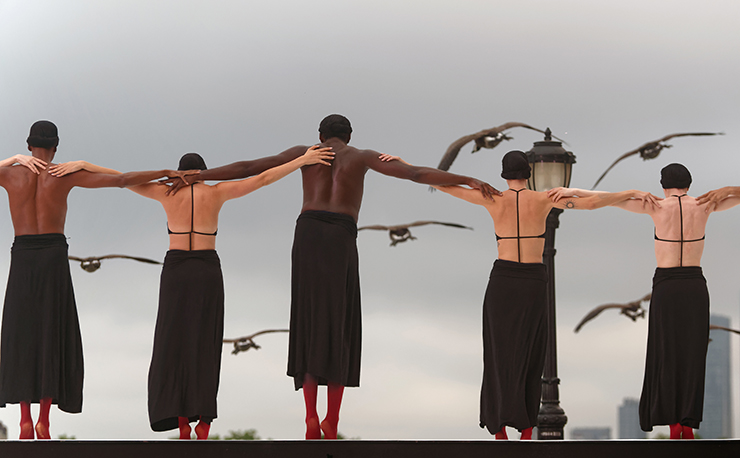
Those Birds of a Feather That Flock to Rockefeller Park
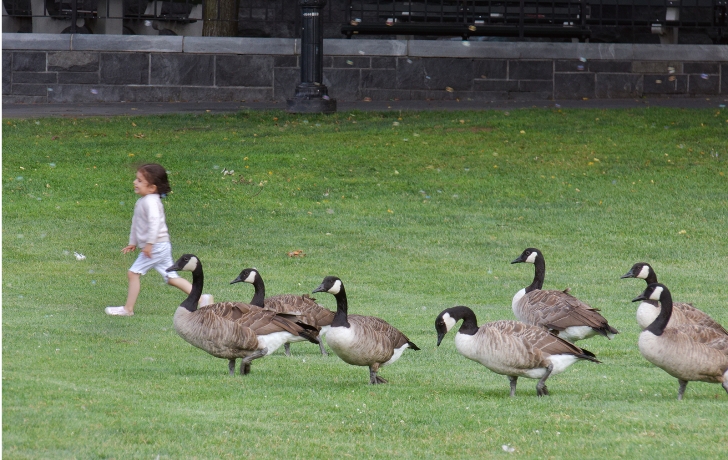
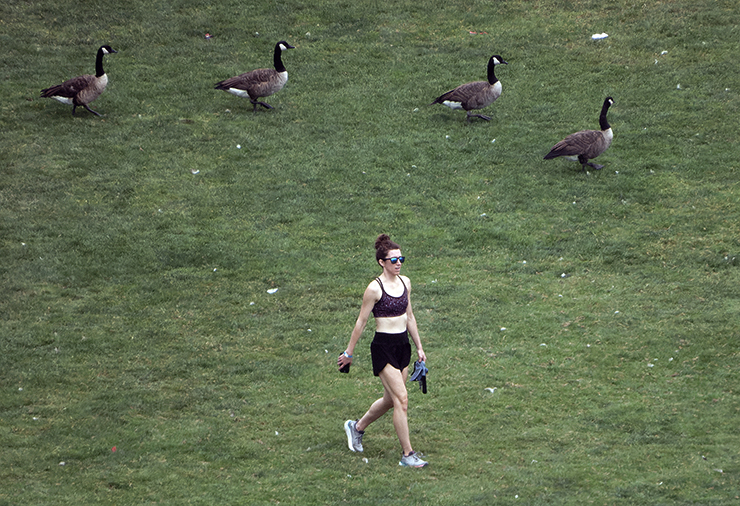
If they aren't feeding on the Rockefeller Park lawn, visiting Canada geese are often striding purposefully across it. Photo: Carl Glassman/Tribeca Trib
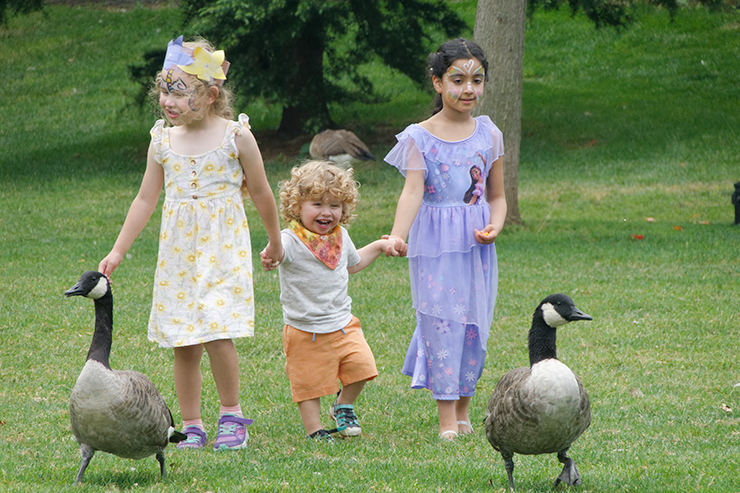
If you’ve been to Rockefeller Park in the last couple of weeks, you may have found yourself sharing the lawn with a gaggle of honking visitors. The Canada geese are back, strutting about the place and dining non-stop on the nutritious (for them) carpet of grass. While we all know that these birds signal a need for caution underfoot, their latest return has led us to question their impact on Rockefeller Park in other ways—and why they are here in the first place.
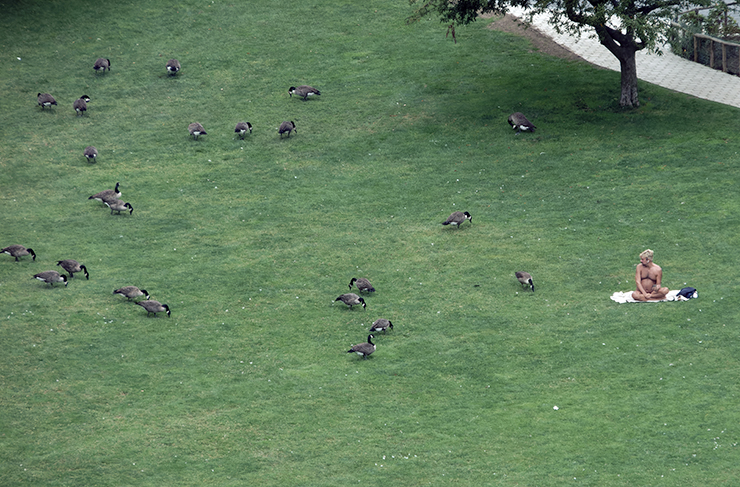
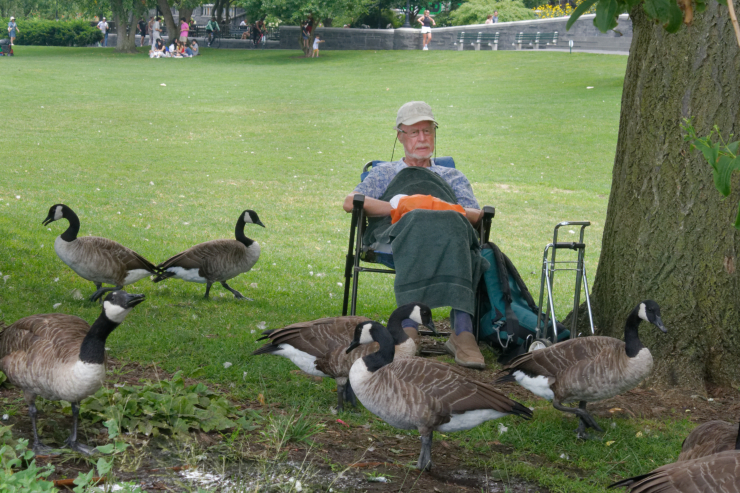 “From a horticultural perspective the geese don’t have any appreciable impact on our lawns in terms of causing damage,” David Wallace, director of horticulture for Battery Park City Authority Parks, said in a phone interview. He said he is also not aware of complaints about the birds, which are among the few species that can digest grass and therefore are common in parks, golf courses and other grassy areas.
 The vigorously growing “tender young shoots” of the Rockefeller Park lawn are an added attraction, Wallace said, as is the park’s proximity to the Hudson River, a navigational aid to migrating birds. (Many geese in cities are “resident” birds, experts say, so are not necessarily migratory.) While geese typically like to upturn soil and dig for beetle larvae, known as grub, Wallace noted that his horticulturists periodically use an organic method to rid the soil of the grass-killing organisms, which also means protecting the lawn from the earth-digging birds.
With the exception of potential safety concerns, Wallace noted that the mantra of the park’s horticulturists is “keep it wild” by interacting as little as possible with the local fauna. “We’re not the only living things out there that want to enjoy the park,” he said.